Spare parts for Krones machines Beverage Production Line Maintenance & Overhaul Standard Procedure
Beverage Production Line Maintenance & Overhaul Standard Procedure
The whole process strictly follows five golden rules: LOTO lockout-tagout, genuine Krones spare parts, torque standard, lubrication specification, and hygienic validation.
Machine Shutdown & LOTO Lockout
Cut off power, compressed air, steam and material supply; hang warning signs and lock main power switches; release residual pressure and stored energy of the system.
Hygienic Isolation
Isolate hygienic zones including Filler, UHT and CIP system independently to avoid cross-contamination.
Tools & Spare Parts Management
2. Daily Maintenance (Per Shift / Daily, Operator In Charge)
Pre-Start Preparation (10–15 Minutes)
Cleaning: Wipe machine surface, star wheels, gripper plates, filling valves, discharge outlets, conveyor belts and safety guards; remove syrup stains, residue and dirt; disinfect hygienic areas with 75% alcohol.
Safety Inspection: Check emergency stop, safety doors and guards for intact condition; verify no leakage or damage in pneumatic circuit (0.6–0.8 MPa), water circuit and electric circuit; confirm normal status of CIP/SIP valves.
Lubrication: Apply 1–2 drops of Krones specified lubricating oil (e.g. ISO VG 220) to daily lubrication points including chains, guide rails, cylinder hinges and bearings; over-lubrication is strictly prohibited.
Jogging Test: Run idle for 1–3 minutes to check abnormal noise, vibration and jamming; ensure accurate positioning of filling, capping and labelling; verify sensitivity of sensors and photoelectric switches.
Online Operation Monitoring (Full-Time)
Process Parameters: Monitor air pressure, water pressure, temperature, flow rate, filling pressure/liquid level, capping torque, labelling accuracy and date coding clarity.
Abnormal Noise & Vibration: Check motors, gearboxes, bearings, gears and chains for abnormal sound and over-temperature (≤40℃).
Leakage Inspection: Ensure no dripping of material, water, steam or lubricant; keep perfect sealing in hygienic zones.
Post-Shutdown Maintenance
CIP Cleaning (Mandatory for Hygienic Lines)
Pre-rinse: Flush with clean water for 3–5 minutes to remove residue.
Alkaline cleaning: 1.5% NaOH at 85℃, circulate for 15–20 minutes to remove protein and grease.
Hot water rinse: Rinse with 85℃ hot water until neutral.
Acid cleaning: 0.5% HNO₃ at 60℃, circulate for 10–15 minutes to remove limescale.
Final rinse: Flush with sterile water until conductivity ≤5 μS/cm.
Surface Cleaning: Wipe the whole machine thoroughly, remove syrup and adhesive residue; keep conveyor belts and mesh belts clean and dry.
Drainage & Power Off: Drain residual water from pipelines, turn off water, air and power supply, restore LOTO safety lockout status.
3. Weekly Maintenance (Maintenance Team + Operator, 4–8 Hours)
Deep Cleaning & Disassembly
Disassemble and clean filling valves, capping heads, star wheels, gripper plates, guide rails, filters, nozzles, O-rings and sealing gaskets.
In hygienic area: Dismantle hygienic valves, distributors and CIP dummy cups for cleaning and sterilization; inspect sealing rings for aging and deformation.
Fastening & Adjustment
Re-tighten all bolts on machine frame, motors, gearboxes, star wheels and bearing housings per Krones standard torque values.
Adjust tension of belts and chains (oven chain, conveyor chain); inspect wear and elongation, re-tension or replace worn spare parts if necessary.
Calibrate gaps between filling valve & bottle mouth, capping head & bottle top, star wheel & gripper plate; correct synchronization and phase for blow molding-filling-labelling linkage.
Lubrication System Inspection
Check oil level, working pressure, filter element and pipeline leakage of centralized lubrication station; replace oil and filter elements per maintenance cycle.
Replenish high-temperature grease (e.g. Molykote) for key bearings and gears; check overheating and abnormal noise.
Electrical & Pneumatic Maintenance
Dust removal for electric cabinet, cool fan inspection and terminal fastening; insulation test (≥1 MΩ).
Drain water from pneumatic filters, calibrate pressure reducing valves, test solenoid valve action, adjust cylinder leakage and buffer damping.
4. Monthly / Quarterly Maintenance (Maintenance Team Led, 1–2 Days)
Comprehensive Equipment Inspection
Mechanical parts: Inspect spindle, bearings, gearboxes, couplings, cams and guide rails for wear, crack and deformation; disassemble for detailed inspection when needed.
Power system: Motor insulation, temperature rise and vibration check; inspect gearbox oil level and oil quality, replace gear oil every 5000 working hours.
Hydraulic & pneumatic system: Monitor pump station pressure and oil temperature, check leakage; calibrate accumulator pressure and replace filter elements.
Deep Hygienic System Maintenance
SIP sterilization validation: Verify steam temperature (≥121℃), pressure and holding time; test water leakage and level alarm of sterile water system.
Sealing renewal: Replace O-rings, gaskets and sealing components all over the line (especially hygienic zone) to prevent aging leakage.
Precision Calibration
Filling accuracy: Calibrate flow and liquid level sensors, control error within ≤±0.5%.
Capping torque: Calibrate capping head torque (e.g. 25–35 N·cm) to ensure leak-proof sealing.
Labelling & coding: Calibrate position, angle and printing clarity; adjust sensor sensitivity.
Wear Parts & Aging Spare Parts Replacement
Wear parts: Conveyor belts, mesh belts, rollers, guide plates, nozzles, filters, brushes, belts and chains.
Aging parts: Cables, hoses, sealing parts, solenoid valves, sensors and indicator lights.
5. Annual Overhaul & Spare Parts Replacement (Krones OEM or Certified Team, 3–7 Days)
Three Standard Overhaul Modes
On-Site Full Overhaul: Complete machine disassembly, deep cleaning, repair or replacement of core components (spindle, bearing, gearbox, hygienic valve block), precision restoration and hygienic validation.
Component Replacement Solution (Recommended for Minimum Downtime): Remove old modules on-site (filling module, labelling unit, CIP station), install pre-reconditioned original Krones refurbished assemblies plug-and-play; downtime ≤ 8 hours; send old components back to factory for overhaul and inventory storage.
Factory Return Overhaul: Send core units (ultra-clean filling head, UHT heat exchanger) back to Krones factory for full disassembly, precision cleaning, inspection, repair/ spare parts replacement, calibration, performance testing and quality certification before re-installation.
Standard 11-Step Overhaul Workflow
Planning & Approval: Confirm overhaul scope, schedule, risk assessment and solution; prepare Krones spare parts and special tools.
Shutdown & LOTO: Safety isolation and residual energy release.
Disassembly & Marking: Disassemble from outer to inner, accessory to main unit; number, photograph and classify all components.
Cleaning & Inspection: Remove oil and residue; detect wear, crack, deformation and seal failure; judge repair or replacement demand.
Repair & Spare Parts Replacement: Repair repairable components professionally; install genuine Krones spare parts and fasten per standard torque.
Assembly & Adjustment: Reassemble in reverse disassembly order; fill specified lubricant grease; calibrate gap, tension, stroke and electrical parameters.
No-Load Commissioning: Jog and low-speed operation to inspect abnormal noise, temperature rise, vibration and leakage.
Load Commissioning: Gradually run to rated speed; monitor pressure, current, temperature and precision for performance verification.
Hygienic Validation (Sterile Line): SIP sterilization test, sterile water microbiological inspection and hygienic zone tightness test.
Acceptance & Filing: Self-inspection → mutual inspection → professional inspection; fill overhaul records, sign off and clean site.
Production Resumption: Parameter backup, operator training and formal production restart.
6. Special Maintenance for Key Systems
1) CIP/SIP Hygienic System (Core Unit)
CIP: Mandatory after each production batch; strictly follow formula for alkaline/acid concentration, temperature and time; circulation flow ≥ 2 m/s; final rinse conductivity ≤5 μS/cm.
SIP: Execute daily before sterile production; steam ≥121℃, 0.2 MPa, holding 30 mins; sterile water tank liquid level ≥30% to avoid dry burning and alarm.
Filter Cartridge: Replace terminal 0.22 μm sterile filter every 3 months; pass filter integrity bubble point test.
2) Blowing Molding Machine (If Integrated)
Adjust heating chain tension and lubrication; inspect roller wear; calibrate oven temperature uniformity.
Test blowing valve leakage and pressure calibration; clean nozzles; adjust mold gap and alignment.
3) Labelling Machine
Clean glue roller and scraper, inspect wear and gap; control hot melt glue temperature at 160–180℃ and calibrate glue dosage.
Adjust label web tension and sensor sensitivity; calibrate labelling position; inspect slitting blade wear.
7. Fault Handling & Quick Recovery Process
Abnormality Reporting: Operator immediately stops machine once abnormal noise, leakage or precision deviation occurs, report to team leader and maintenance department.
Diagnosis & Evaluation: Maintenance engineer inspects on-site, combines HMI alarm, historical data and fault code to locate root cause (mechanical / electrical / hygienic).
Emergency Handling: Fix minor faults (sensor contamination, belt deviation) on-site directly; start overhaul or spare parts replacement plan for serious faults (bearing burnout, hygienic valve leakage).
Validation & Recovery: Complete no-load → load → hygienic test (if required) after repair; confirm normal parameters and zero leakage.
Record & Filing: Fill fault report including phenomenon, root cause, solution, used spare parts and working hours; update equipment file and analyze failure trend for preventive maintenance.
8. Core Management Guidelines
Follow OEM Specification: Strictly comply with Krones Operation & Maintenance Manual; never modify original parameters, torque values and lubrication points arbitrarily.
Spare Parts Inventory Strategy: Keep safety stock ≥ 2 sets for key Krones spare parts (filling valve, hygienic seal, sensor, solenoid valve); prioritize original OEM procurement.
Personnel Qualification: Maintenance and operation staff must complete Krones certified training and hold valid certificates; arrange regular re-training.
Data-Driven Management: Establish equipment ledger to record maintenance, overhaul, fault and parameter changes; adopt Krones KPI system to analyze OEE, failure rate and MTBF for continuous maintenance cycle optimization.
9. Common Misoperations & Prohibitions
❌ Dismantle equipment without LOTO lockout → Isolate energy source first always.
❌ Use non-genuine spare parts or alternative lubricants → Cause precision failure, accelerated wear and hygienic risks.
❌ Excessive lubrication (especially hygienic zone) → Lead to product contamination and bacterial breeding.
❌ Unqualified CIP concentration & temperature → Incomplete cleaning, limescale accumulation and hygiene hazards.
❌ Ignore hygienic validation → SIP and sterile test must be passed before production after overhaul and spare parts replacement.
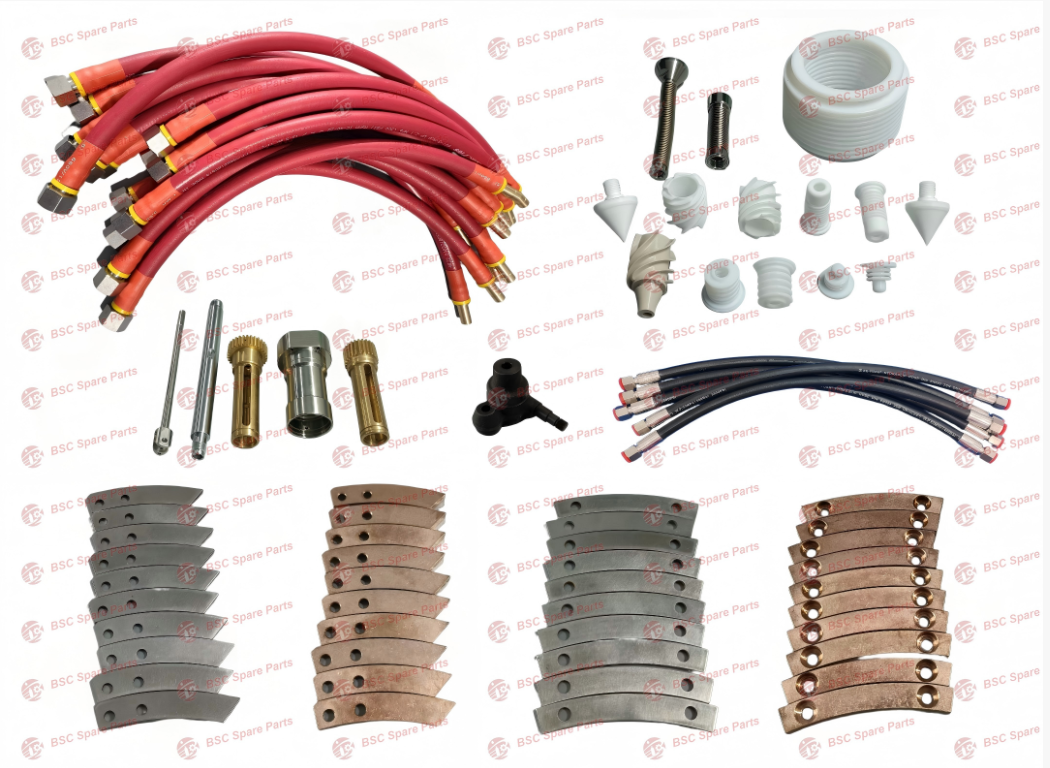
Mature replacement spare parts on the conventional market.
Complete one-stop spare parts service.
Factory supply replacement for Krones spare parts,Sidel spare parts,KHS spare parts,Arol spare parts.
Filler PET/Glass/Can filling machines parts of Krones spare parts, Sidel spare parts, KHS spare parts
Labler parts labeling machines parts of Krones spare parts, Sidel spare parts, KHS spare parts
Film Wrapping machines parts of Krones spare parts, Sidel spare parts, KHS spare parts
Washer bottle machines parts of Krones spare parts, Sidel spare parts, KHS spare parts
EBI Empty Bottle Inspector machines parts of Krones spare parts, Sidel spare parts, KHS spare parts
**Replacement parts are not made by the original manufacturer. KRONES®, SIDEL®, KHS®, SACMI®, AROL® SIG®, SIPA®, TECH-LONG®, etc. These SPARPAE RTS are replacement parts for OEM parts, mainly made in China and sold all over the world.
KRONES® Krones spare parts is a registered trademark of KRONES AG. BSC is not a licensee of KRONES AG, nor are BSC parts approved or authorized by KRONES AG
KHS® KHS spare parts is a registered trademark of KHS GmbH. BSC is not a licensee of KHS GmbH, nor are BSC parts approved or authorized by KHS GmbH
SIDEL® Sidel spare parts and SBO® spare parts are registered trademarks


